SINTA 2 Indexed
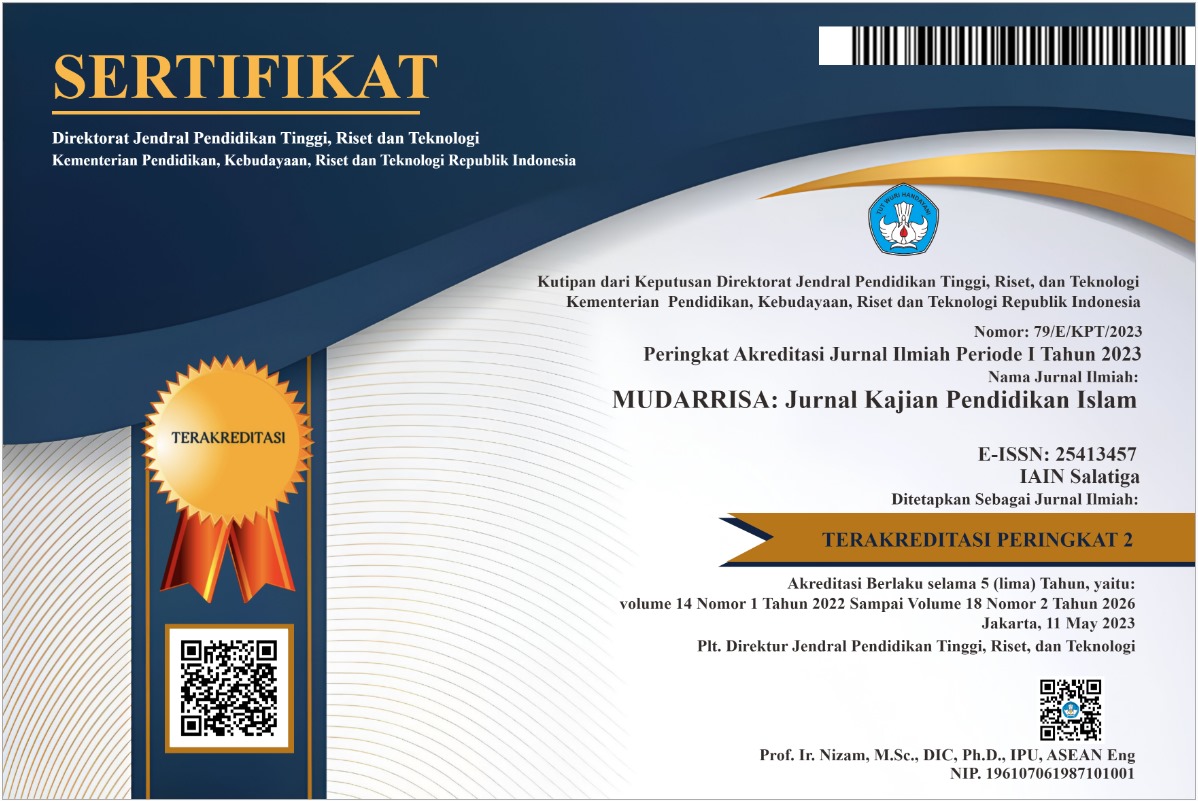

MUDARRISA: Jurnal Kajian Pendidikan Islam recognizes post-publication scholarly discussion as an important mechanism for strengthening academic dialogue, research transparency, and the reliability of published findings.
The journal encourages constructive, evidence-based discussion of published research while maintaining scholarly integrity, professional respect, and editorial independence.
Post-publication discussion may address:
Discussion must be relevant to the published work and supported by appropriate evidence.
Readers, researchers, authors, and other interested parties may submit scholarly comments or documented concerns through the journal's official contact channel:
https://ejournal.uinsalatiga.ac.id/index.php/mudarrisa/about/contact
Submissions should identify the relevant article, explain the issue clearly, and provide supporting references or evidence where appropriate.
The editorial office will assess submitted comments for relevance, scholarly substance, factual accuracy, and compliance with publication ethics.
The journal may request clarification, additional evidence, or independent expert assessment before determining an appropriate response.
Submissions containing personal attacks, discriminatory statements, unsupported allegations, or inappropriate disclosure of confidential information will not be accepted for publication.
When a substantial concern concerns a published article, the editorial office may invite the original authors to provide a response or clarification.
The journal seeks to ensure that scholarly disagreements are evaluated fairly and that affected parties have a reasonable opportunity to respond.
Substantive scholarly discussion may be considered for publication as correspondence, a commentary, an author response, or another clearly identified editorial format, subject to the journal's editorial standards and available publication arrangements.
The editorial office reserves the right to moderate submissions and determine whether they meet the requirements for publication.
When post-publication discussion identifies a material error or raises credible concerns about research integrity, the matter will be referred for assessment under the journal's Corrections and Retractions Policy or Allegations of Research Misconduct Policy.
Where warranted, the journal may publish a correction, expression of concern, or retraction.
Post-publication discussion is intended to promote responsible scientific exchange rather than personal criticism or reputational harm.
The journal supports evidence-based disagreement, appropriate acknowledgment of scholarly contributions, confidentiality where required, and transparent correction of the academic record.
SINTA 2 Indexed
Journal Information
Publication Ethics & Rights
Journal Management
Manuscript Template Download

Reference Manager Applications

Visit Statistics
Mudarrisa: Jurnal Kajian Pendidikan IslamISSN (electronic): 2541-3457 | ISSN: 2085-2061
Mailing address :
Editorial Office of Mudarrisa: Jurnal Kajian Pendidikan Islam
Universitas Islam Negeri (UIN) Salatiga Jl. Lingkar Salatiga Km. 2 Pulutan, Sidorejo, Kota Salatiga, Jawa Tengah, Indonesia Technical issues email: [email protected] Contact information |
Content Use Policy |