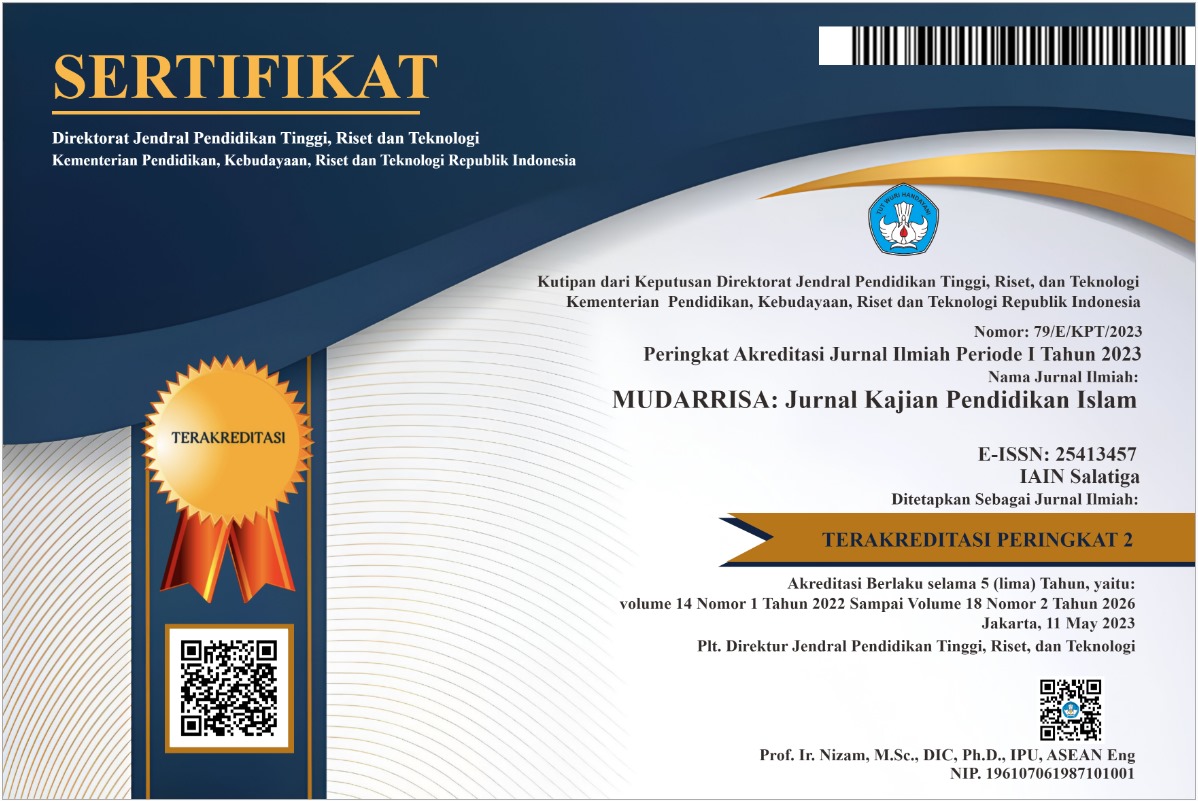
SINTA 2 Indexed

MUDARRISA: Jurnal Kajian Pendidikan Islam is committed to protecting research integrity and maintaining the reliability of the scholarly record.
The journal addresses credible allegations of research and publication misconduct in accordance with its Publication Ethics and relevant guidance from the Committee on Publication Ethics (COPE).
Allegations may be raised before or after publication and will be assessed fairly, objectively, and confidentially.
Research and publication misconduct may include:
An allegation does not constitute proof of misconduct.
Authors, reviewers, readers, editors, and other stakeholders may report suspected misconduct through the journal's official contact channel:
https://ejournal.uinsalatiga.ac.id/index.php/mudarrisa/about/contact
Reports should identify the relevant manuscript or article, explain the concern, and provide supporting evidence where available.
The journal may consider confidential or anonymous reports when sufficient evidence is provided for preliminary assessment.
The Editor-in-Chief or an appropriately designated editor will evaluate the credibility, relevance, and potential seriousness of the allegation.
This assessment may involve examining editorial records, identifying competing interests, reviewing supporting evidence, and requesting additional information.
Where the allegation involves the Editor-in-Chief, an independent editor or appropriate institutional authority should oversee the assessment.
When a credible concern is identified, the editorial office may request explanations and supporting evidence from the individuals concerned.
Affected parties will be given a fair opportunity to respond.
The journal may consult independent experts, research integrity officers, relevant institutions, or other journals where necessary.
Institutions ordinarily retain responsibility for formal investigations into researchers' conduct, while the journal evaluates the reliability of the published scholarly record.
Depending on the evidence, possible editorial actions include:
Editorial decisions must not depend solely on similarity scores, automated recommendations, or unsupported accusations.
The journal will protect confidential information and maintain appropriate records of allegations, correspondence, evidence, and decisions.
All parties must be treated fairly. Retaliation against individuals who report concerns in good faith is prohibited.
Unsubstantiated allegations will not be publicly presented as established misconduct.
When misconduct or serious irregularities affect a published article, MUDARRISA may issue a correction, expression of concern, or retraction.
Editorial notices will be clearly identified, publicly accessible, and linked to the affected article where technically feasible.
These actions are intended to protect the accuracy and integrity of scholarly literature rather than impose punishment.
Parties who identify a material procedural error, unmanaged conflict of interest, or significant new evidence may request reconsideration through the journal's official contact channel.
Where practicable, appeals will be assessed by an editor who did not make the original decision.
Committee on Publication Ethics (COPE): https://publicationethics.org/core-practices
This policy should be read together with the journal's Publication Ethics, Peer Review Process, Conflict of Interest Policy, and Corrections and Retractions Policy.
SINTA 2 Indexed
Journal Information
Publication Ethics & Rights
Journal Management
Manuscript Template Download

Reference Manager Applications

Visit Statistics
Mudarrisa: Jurnal Kajian Pendidikan IslamISSN (electronic): 2541-3457 | ISSN: 2085-2061
Mailing address :
Editorial Office of Mudarrisa: Jurnal Kajian Pendidikan Islam
Universitas Islam Negeri (UIN) Salatiga Jl. Lingkar Salatiga Km. 2 Pulutan, Sidorejo, Kota Salatiga, Jawa Tengah, Indonesia Technical issues email: [email protected] Contact information |
Content Use Policy |