SINTA 2 Indexed
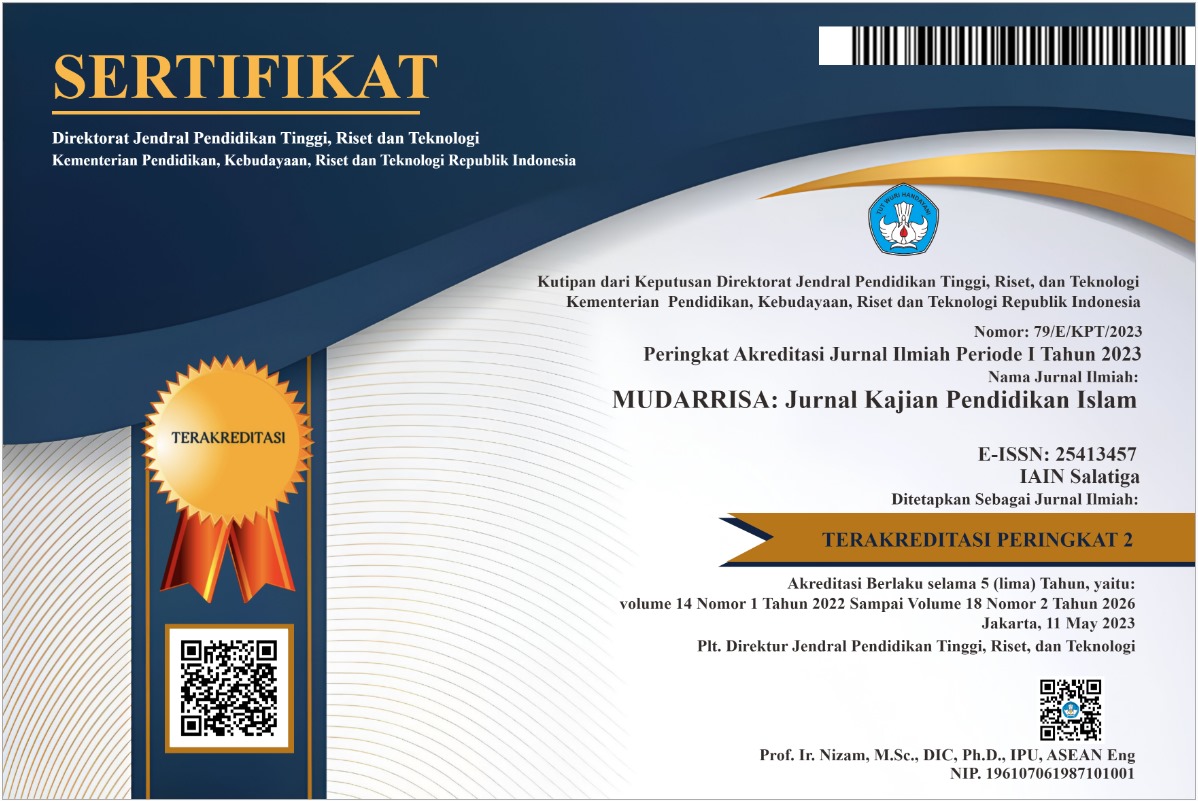

MUDARRISA: Jurnal Kajian Pendidikan Islam upholds transparency, accountability, confidentiality, and research integrity in the use of artificial intelligence (AI), including Generative Artificial Intelligence (GenAI), in scholarly publishing. AI tools may assist authors with language editing, grammar correction, translation, formatting, readability improvement, literature searching, coding, and analytical tasks, provided that their use is ethically appropriate, transparent, and subject to human verification and oversight. AI assistance must not replace the authors' independent scholarly judgment, critical analysis, or responsibility for the research.
Authors are strictly prohibited from using AI tools to fabricate or falsify data, create fictitious references, manipulate research findings, generate unsupported academic claims, misrepresent analytical procedures, or produce misleading scholarly content. Authors remain fully responsible for the accuracy, originality, methodological validity, reliability, ethical compliance, and integrity of all submitted materials, including content produced or modified with AI assistance. All AI-assisted references, interpretations, analytical outputs, and factual claims must be independently verified by the authors.
Disclosure of AI Assistance
Authors must disclose material or substantive use of AI tools during manuscript preparation, research design, data processing, coding, analysis, or content development. Such disclosures should identify the AI tool used, describe the purpose and extent of its use, and clarify the authors' responsibility for verifying the resulting content. Routine spelling, grammar, and basic language corrections that do not materially alter the scholarly content ordinarily do not require disclosure. Authors must ensure that all disclosures comply with the journal's submission requirements and applicable research ethics standards.
AI and Authorship
AI systems and GenAI tools cannot be listed as authors or co-authors because they cannot make accountable intellectual contributions, approve the final manuscript, disclose competing interests, or assume responsibility for research integrity. Authorship is restricted to human contributors who satisfy the journal's authorship criteria, approve the final version, and accept accountability for the integrity of the published work.
Confidentiality and Editorial Use of AI
Editors, reviewers, and editorial personnel must not upload unpublished manuscripts, confidential review reports, editorial correspondence, identifiable participant data, author information, or other privileged materials to externally operated AI systems. This restriction protects manuscript confidentiality, intellectual property, personal data, and the integrity of the peer-review process. AI-assisted tools may support appropriate editorial administration and technical assessment without disclosing confidential materials, but they must not replace independent human evaluation or accountable editorial judgment.
Suspected Misuse and Editorial Action
Suspected misuse of AI, including fabricated references, falsified or manipulated research content, undisclosed substantive AI assistance, misleading analytical claims, or breaches of confidentiality, shall be assessed in accordance with the journal's Publication Ethics and relevant guidance from the Committee on Publication Ethics (COPE).
The editorial team shall assess credible concerns on the basis of available evidence, protect confidentiality, manage relevant competing interests, and provide affected parties with a fair opportunity to respond where appropriate. Allegations of AI misuse shall not be treated as proven misconduct solely on the basis of automated AI-detection results or unverified claims.
Depending on the evidence and the stage of publication, appropriate editorial actions may include requesting clarification or correction, suspending editorial assessment, rejecting a manuscript, or initiating further investigation. For published articles, the journal may issue a correction, expression of concern, or retraction when justified under its Publication Ethics and applicable COPE guidance. Retraction is intended to correct the scholarly record rather than serve as a punishment.
SINTA 2 Indexed
Journal Information
Publication Ethics & Rights
Journal Management
Manuscript Template Download

Reference Manager Applications

Mudarrisa: Jurnal Kajian Pendidikan IslamISSN (electronic): 2541-3457 | ISSN: 2085-2061
Mailing address :
Editorial Office of Mudarrisa: Jurnal Kajian Pendidikan Islam
Universitas Islam Negeri (UIN) Salatiga Jl. Lingkar Salatiga Km. 2 Pulutan, Sidorejo, Kota Salatiga, Jawa Tengah, Indonesia Technical issues email: [email protected] Contact information |
Content Use Policy |