Journal History

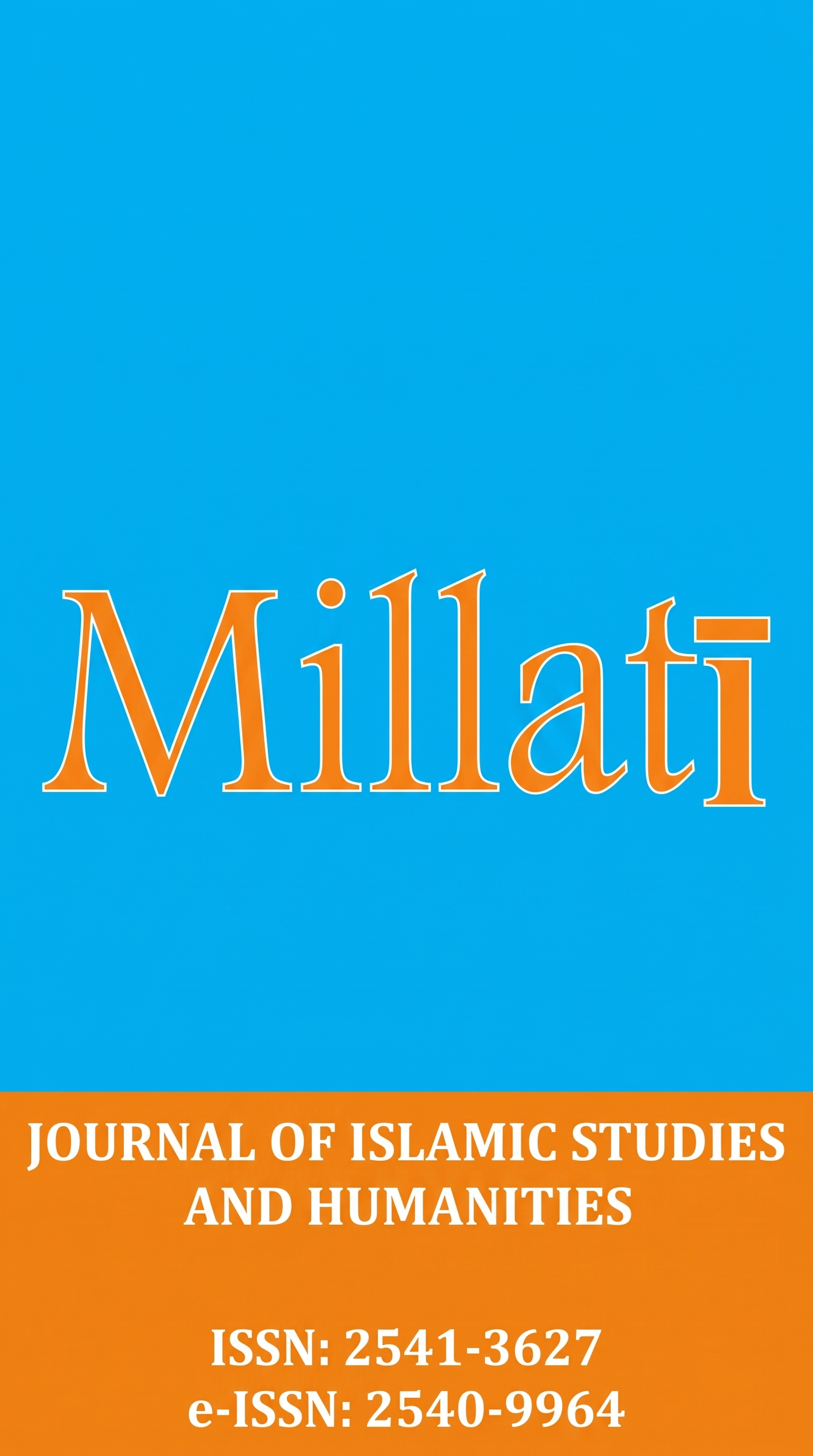
Millati: Journal of Islamic Studies and Humanities was established in 2016 as a scholarly publication of the Faculty of Ushuluddin, Adab, and Humanities, Institut Agama Islam Negeri (IAIN) Salatiga, Indonesia, now Universitas Islam Negeri (UIN) Salatiga. Since its establishment, the journal has provided a platform for scholarly research in Islamic studies and the humanities, engaging with Islamic intellectual traditions, religious thought, history, culture, and the social realities of Muslim communities. Over the years, MILLATI has undergone several stages of development, marked by wider scholarly visibility, national accreditation, institutional transformation, and improvements in its digital publishing infrastructure.

2016 — Establishment and Early Publication
MILLATI began publication in 2016, with its first volume comprising two issues. The journal was established to facilitate scholarly exchange across various fields of Islamic studies and the humanities, providing opportunities for researchers to contribute to academic discussions on Islamic thought, texts, traditions, and socio-cultural practices.

2017 — Expanding International Visibility
An important milestone was achieved on 3 October 2017, when MILLATI was added to the Directory of Open Access Journals (DOAJ). This development strengthened the international discoverability of its scholarly publications and supported the dissemination of open-access research beyond its immediate institutional context.

2019–2022 — Intellectual Development and National Recognition
During this period, MILLATI published scholarly discussions addressing increasingly diverse historical and contemporary questions. Its archived issue themes included Indonesian Islam and peaceful coexistence, Islamic thought in a changing world order, the relationship between Islamic thought and Islamic studies in the post-pandemic context, and the decolonization of Islamic thought and the humanities. A significant milestone was achieved on 23 December 2020, when MILLATI received SINTA 2 accreditation under Decree No. 200/KPT/2020, reflecting national recognition of the journal's scholarly publishing standards.

2022–2023 — Institutional Transformation and Digital Modernization
In 2022, the journal's parent institution underwent a significant transformation when IAIN Salatiga was elevated to Universitas Islam Negeri (UIN) Salatiga, pursuant to Presidential Regulation No. 88 of 2022. Adapting to this transformed institutional environment, MILLATI launched a major modernization of its digital publishing infrastructure the following year. Beginning with Volume 8, Number 1 in 2023, the journal transitioned from its former OJS 2 website to a new, updated publishing platform. This transition redirected new manuscript submissions to the upgraded interface while maintaining archival access to earlier scholarship, marking a critical step forward in the journal's online presence and publication management.

2024–2026 — Broadening Scholarly Participation
Recent volumes of MILLATI demonstrate geographical diversity among contributing authors. Published issues from 2024 to 2026 document affiliations from Indonesia and other countries, including Malaysia, Thailand, Egypt, Morocco, Australia, Pakistan, Saudi Arabia, Nigeria, Iran, Canada, and Switzerland. These contributions illustrate the journal's participation in scholarly conversations extending beyond Indonesia, bringing different geographical and intellectual contexts into discussions of Islamic texts, religious traditions, local knowledge, and contemporary socio-cultural questions.

Continuing Development
Entering its second decade of publication, MILLATI continues to build upon its publishing history, national accreditation, and international scholarly participation. The journal seeks to strengthen its editorial practices, scholarly quality, and academic visibility while fostering research that connects local and regional experiences with wider historical, comparative, and theoretical discussions in Islamic studies and the humanities.